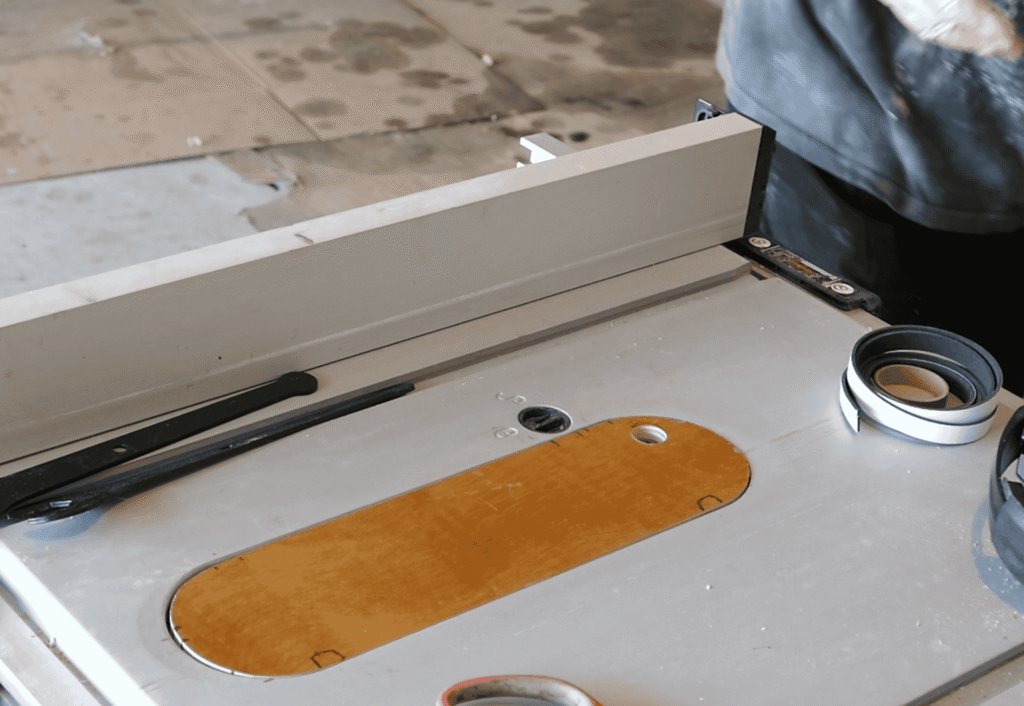
A zero-clearance throat plate is one of those small table saw upgrades that can make a bigger difference than people expect. It helps support the wood closer to the blade, reduces tear-out, and makes the saw feel more controlled, especially when you are cutting smaller pieces or sheet goods.
If you are working from a small garage shop and want cleaner cuts without spending a fortune, this is a simple trick worth knowing.
What a Zero-Clearance Throat Plate Actually Is
A zero-clearance throat plate is a table saw insert with a blade slot that matches the blade much more closely than the standard factory insert. Instead of a wide opening around the blade, the wood gets better support right next to the cut line.
That tighter support is what helps the saw cut more cleanly and feel more controlled.
Why It Helps So Much
- Cleaner cut edges
- Less tear-out, especially on plywood and finer material
- Better support for smaller offcuts
- Less chance of little pieces dropping into the gap around the blade
- A more precise feel when using the saw
That is why so many woodworkers end up using zero-clearance inserts once they try them. It is a small upgrade, but the difference is easy to notice.
Where You Notice the Difference Most
- Plywood cuts
- Cleaner rip cuts on boards that tend to splinter
- Smaller pieces that need better support
- Projects where you want less sanding and cleanup after the cut
If you have ever had a cut come out rough at the edge or watched a small offcut disappear into the stock insert gap, this is the kind of upgrade that helps straight away.
Store-Bought or DIY?
Both can work. A bought insert is the quicker option if you can get one that fits your saw properly. A DIY insert is often cheaper and lets you make exactly what you need for your own setup.
- Store-bought: quicker and easier if the fit is right
- DIY: cheaper, satisfying to make, and easy to customise
Once you make one, it is easy to understand why people keep a few around for different blades or different uses.
What You Need to Make One Yourself
- A piece of plywood, MDF, or other suitable sheet material
- A way to shape it to match your saw insert opening
- Your table saw to create the blade slot
- A bit of patience getting the fit right
The main thing is getting a snug fit and cutting the slot carefully so the insert works properly with your blade setup.
Why It Also Helps With Safety and Control
A zero-clearance plate is not a magic fix for unsafe table saw use, but it can help by supporting the work better and reducing the chance of small pieces dropping into the wide factory gap. That makes the saw feel less fussy and more predictable when you are doing careful work.
It is one of those upgrades that helps the saw work in a cleaner, more controlled way.
This Fits Well With Other Zero-Clearance Upgrades
If you like this kind of small but useful upgrade, these posts go well with it:
- Zero Clearance Miter Saw Fence: What It Is and How to Build One
- How I Built a Zero-Clearance Fence Table for My Sliding Miter Saw
- Best Beginner Table Saw on a Budget for a Small Garage Shop
- How to Choose a Sliding Miter Saw for a Small Garage Shop
Bottom Line
A zero-clearance throat plate is a simple upgrade that can give you cleaner cuts, better support, and a more controlled feel from your table saw. It does not cost much, it does not take much room, and it is one of those practical garage-shop improvements that actually earns its place.
If you want to watch the build, go here: Watch my zero-clearance throat plate video on YouTube.
If you want more practical garage-shop builds, tool ideas, and woodworking as I learn along the way, you can subscribe to my YouTube channel here.
More Posts You May Want to Read
- Zero Clearance Miter Saw Fence: What It Is and How to Build One
- How I Built a Zero-Clearance Fence Table for My Sliding Miter Saw
- Best Beginner Table Saw on a Budget for a Small Garage Shop
- How to Choose a Sliding Miter Saw for a Small Garage Shop
- Woodworking Shop Layout Ideas for a Small Garage Shop