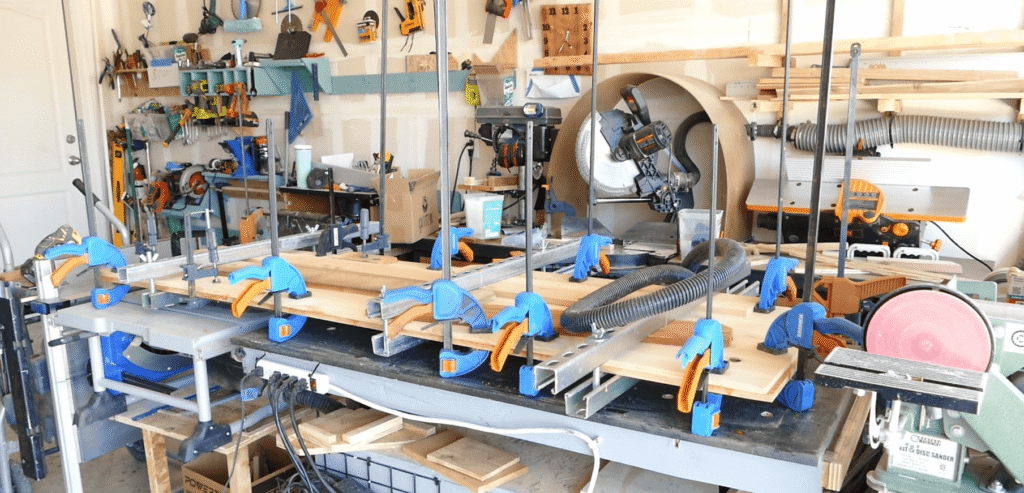
A good wood glue-up is not about crushing the boards together as hard as you can. It is about even pressure, good preparation, and keeping the panel flat while the glue cures. If you have ever had a panel bow, twist, or open up with gaps, the problem is usually not the glue. It is the way the pressure was applied.
This is the simple approach I use in a small garage shop to keep glue-ups under control without overcomplicating things.
What Usually Goes Wrong in a Glue-Up
- Too much clamp pressure in one spot
- Not enough pressure across the full joint
- Too much glue making a mess instead of a bond
- Boards not lined up properly before tightening
- No support to keep the panel flat while it dries
Most glue-up problems start before the clamps are even tightened. If the boards are fighting each other, too much force usually makes things worse rather than better.
The Main Rule: Snug, Then Stop
You do not need to put huge force on every clamp. The goal is to close the joint evenly and get a light, consistent squeeze-out line along the seam.
If glue is pouring out everywhere and the panel starts bowing, you have probably gone too far.
How I Do a Wood Glue-Up Properly
- Dry fit the boards first. Make sure they sit the way you want before you bring glue into it.
- Use a thin, even glue spread. Cover the joint surface properly, but do not flood it.
- Set the clamps with light pressure first. Get everything in place before fully tightening anything.
- Tighten gradually. Work across the clamps in small steps instead of cranking one clamp down all at once.
- Watch for an even glue bead. Once you see a consistent squeeze-out line, stop.
- Check the panel for flatness. If it starts bowing, correct it before the glue begins to set.
How to Help Stop Boards From Bowing
- Use even clamp spacing
- Tighten in small increments
- Alternate clamp positions where it makes sense
- Use cauls or clamp bars to keep the panel flat
- Do not rely on brute force to fix bad alignment
Wood moves under pressure. A smarter glue-up comes from spreading the pressure out, not from trying to overpower the boards.
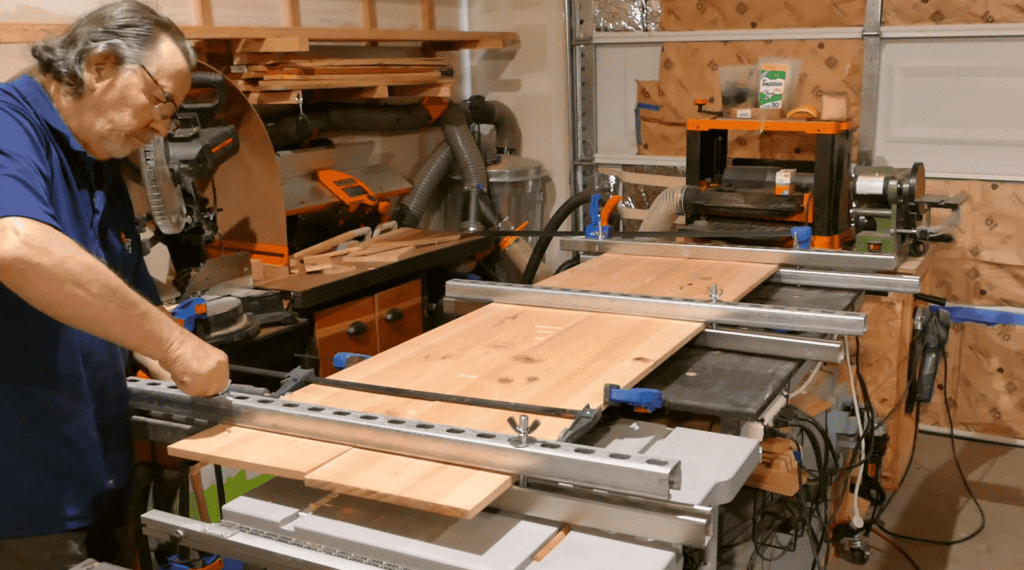
DIY Clamps Can Work Fine Too
You do not always need expensive clamps to get a good result. If your clamps apply even pressure and keep the work stable, they can do the job well. In my case, I also use DIY clamp setups made from super strut when I want strong, flat pressure without spending a fortune on specialist clamps.
The point is not whether the clamp looks fancy. The point is whether it helps hold the panel flat and steady while the glue dries.
A Few Simple Glue-Up Tips That Help
- Get everything ready before opening the glue
- Keep a rag or paper towels nearby for cleanup
- Check alignment before full pressure goes on
- Do not rush just because the glue is open
- Test your clamp setup on scrap if you are unsure
Watch the Clamp Build and Glue-Up Video
If you want to see the DIY clamp idea and glue-up approach in action, watch the video here:
Watch the DIY wood clamps and glue-up video on YouTube
If you want more practical garage-shop builds, tool ideas, and woodworking as I learn along the way, you can subscribe to my YouTube channel here.